
Historic Granbury Square
Check Availability

John Wilkes Booth’s Death and his Mysterious Connection to Granbury

You may have heard the theory that John Wilkes Booth wasn’t actually killed in 1865, but did you know that story is directly tied to Granbury?

According to local legend, the man who assassinated President Abraham Lincoln escaped the manhunt that followed and eventually made his way to Texas. Here, he reportedly lived under a different name, worked in a Granbury saloon, and befriended a local lawyer. It’s a story that adds a curious twist to the town’s history, and one you can explore for yourself while staying at our Granbury hotel, right on the Historic Square.

To understand how this mystery began, let’s go back to the night of Lincoln’s assassination and the events that led to Booth’s reported death.

The Official Account vs. Local Doubts
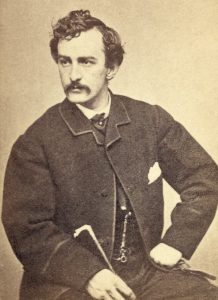
A portrait of John Wilkes BoothOn April 14, 1865, John Wilkes Booth, a well-known stage actor and Confederate sympathizer, entered Ford’s Theatre in Washington, D.C., and shot President Abraham Lincoln during a performance of Our American Cousin. Booth escaped the theater, setting off a massive manhunt that lasted nearly two weeks.

On April 26, Union soldiers and detectives tracked Booth and his accomplice, David Herold, to a tobacco barn on the Garrett family farm in Virginia. The barn was set on fire to force the men out. Herold surrendered, but Booth remained inside. During the confrontation, Sergeant Boston Corbett shot Booth through the neck. He was carried from the barn and died several hours later.

The government identified the body as Booth’s, and his remains were eventually released to his family and buried in Baltimore. For most people, that is where the story ends.

But rumors about the assassination began circulating almost immediately. Booth had been part of a larger conspiracy that originally involved kidnapping President Lincoln before shifting to assassination. Other targets included Vice President Andrew Johnson and Secretary of State William Seward, who was seriously wounded in a separate attack the same night. The plot fueled questions about who else might have been involved and whether everyone connected to it had been brought to justice.

Questions about Booth himself soon followed. Some people questioned the identification of the body found at the Garrett farm, while others believed Booth had escaped with help from people who wanted him to disappear. Over time, those rumors grew into stories that Booth had survived and lived under an assumed name. Eventually, one of those stories would lead straight to Granbury, Texas.

A Mysterious Stranger Arrives in Hood County

In the early 1870s, a well-dressed, soft-spoken stranger using the name John St. Helen arrived in nearby Glen Rose. He later worked as a bartender in saloons around Granbury, but he didn’t fit the typical mold of a frontier worker. Exceptionally literate and well-mannered, he could recite long passages of Shakespeare from memory, an unusual talent for someone in a small Texas town.

St. Helen kept mostly to himself, but a few details about his life caught people’s attention. He regularly received fine clothes and mail from out of state, carried ample money, and allegedly stood on saloon tables or theater stages, reciting dramatic soliloquies and drinking heavily on the anniversary of Lincoln’s death.

There were also reports of an unpredictable temper. In a sworn affidavit given to federal investigators in the 1920s, David Lee Nutt recalled an incident from around 1875 when a man ran into the Nutt brothers’ store with St. Helen close behind, wielding a knife. A struggle broke out at the back of the store, and St. Helen fled when the sheriff approached, leaving the other man injured.

He also caught the attention of a young local attorney named Finis L. Bates, and the two became close friends. That friendship would eventually lead to one of the strangest confessions in Granbury history.

The Alleged Confession That Started the Mystery

The most famous part of the John St. Helen story took place in the winter of 1874–1875, when St. Helen fell seriously ill with a fever and believed he was dying. He summoned Bates to his bedside and made a startling confession: his real name was John Wilkes Booth.

According to Bates, St. Helen shared details about the night at Ford’s Theatre, including the location of a second derringer pistol he claimed to have wrapped in a newspaper and hidden during his escape. He asked Bates to notify his family in Maryland after his death. Bates left town believing he would never see his friend again. But St. Helen recovered, packed his belongings, and rode out of Granbury before sunrise, never to return.

The Strange Story Didn’t End in Granbury

Nearly three decades after St. Helen vanished from Granbury, Bates came across a newspaper story that brought the old confession back to mind.

In 1903, a man named David E. George died by suicide in Enid, Oklahoma. Before his death, George had reportedly claimed to be John Wilkes Booth. Bates believed George was the same man he had known as St. Helen, and he set out to prove it.

Bates obtained George’s embalmed body and began exhibiting it as the mummy of John Wilkes Booth. The unusual attraction toured the country, drawing crowds curious to see what was presented as the remains of Lincoln’s assassin.

In 1908, Bates published The Escape and Suicide of John Wilkes Booth, laying out his case that Booth had survived the shooting in Virginia and lived under different names for years. His book turned a strange local story into a much larger claim, but Bates’s conviction was never enough to establish that St. Helen and Booth were the same person.

Explore Granbury’s History During Your Visit

If the John St. Helen story has you curious about Granbury’s past, there are a few places around town where you can dig a little deeper.

Bridge Street History Center

The Bridge Street History Center is a natural place to start. Its local-history research includes accounts of St. Helen’s time in the area, the people who knew him, and the later investigation into his identity. It’s also a good place to learn about the people and businesses that shaped early Granbury.

Hood County Jail Museum

Hood County Jail Museum

Just off the northeast corner of the Square, the Hood County Jail Museum   offers another look at the area’s past, including an exhibit on John Wilkes Booth. The museum is housed in an authentic old Western jail built in 1885, with upstairs jail cells and hanging gallows preserved from its days as the county jail. The main floor features exhibits on Hood County history, from Jesse James and Belle Starr to the area’s early settlers and the Booth legend that still captures visitors’ imaginations.

Granbury Opera House

Granbury Opera House

Actors at the Granbury Opera House have reportedly seen a particular balcony seat fold down on its own, as if someone has just taken a seat for the show. Local lore says it belongs to Booth, or perhaps to the man who claimed to be him. In 2009, investigators from the Discovery Channel’s Ghost Lab visited the theater and said a recording device picked up a voice claiming to be Booth.

There’s one historical wrinkle: the Opera House wasn’t built until 1886, several years after St. Helen’s time in Granbury. Originally opened as Kerr’s Hall, the building had a theater upstairs and businesses below. St. Helen may have worked in a saloon near the site, but the claims that he performed in the Opera House are much harder to support.

Granbury Ghosts and Legends Tour

For a guided version of the story, join a Granbury Ghosts and Legends Tour . The tour covers the John St. Helen and John Wilkes Booth connection, along with other local legends and haunted-history tales around downtown. It’s a good way to hear the stories tied to familiar buildings and corners of the Square, especially once the sun goes down.

St. Helen’s on the Square

And while you’re walking around, keep an eye out for St. Helen’s, a shop on the Square near the area where St. Helen reportedly tended bar. It’s a fun little connection to the story, and a reminder of how the legend has become part of Granbury’s everyday landscape. You can browse the shops, grab a bite, and imagine what this stretch of town looked like back when St. Helen was pouring drinks and reciting Shakespeare.

Stay in the Heart of Granbury’s History

The story of John St. Helen is just one of the many pieces of Granbury history waiting to be discovered. Spend an afternoon exploring the museums, walk around the Square, and see how many of the town’s old stories you can uncover along the way.

The Nutt House Hotel puts you right in the middle of it all. Located on Granbury’s historic Square, our hotel makes a convenient home base for exploring the places connected to the John St. Helen legend and the history of downtown.

Book your stay in Granbury and learn even more about the mystery of John St. Helen yourself.